
C Purlin Quick Specification Summary:
· Sandard Thickness: 1.5mm - 3.0mm (Customizable up to 5.0mm)
· Flange Width: 40mm - 75mm | Web Height: 80mm - 300mm
· Steel Yield Strength: Q235 / Q355 / Grade 50
· Surface Protection: Pre-Galvanized (Z60–Z275) / Hot-Dip Galvanized
If you're involved in steel building construction, you've probably asked: What is a purlin? In simple terms, a purlin is a horizontal structural member that supports the roof deck or wall cladding. They transfer loads from the roof surface to the primary framing, such as rafters or trusses.
Among the most popular types are C purlins, named for their distinctive "C" shape. This complete guide explains everything you need to know about C purlin steel, its standard sizes, dimensions, applications, and how to source high-quality materials for your project.
A purlin is a vital secondary structural component in modern construction. It spans between main frames and provides a secure fastening surface for roof sheets, wall panels, or insulation. Without them, a roof would have no structural support between the main rafters.
C purlins are cold-formed from high-tensile steel (usually galvanized steel coils) into a shape resembling the letter "C". This smart engineering design gives them an exceptionally high strength-to-weight ratio, making them ideal for:
· Roof purlins: Supporting metal roofing panels and insulation sheets.
· Wall girts: Providing horizontal wall framing and structural cladding support.
· Mezzanine floors: Serving as lightweight floor joists for commercial warehouses.
· Industrial framing: Ideal for factories, agricultural structures, and clear-span buildings.
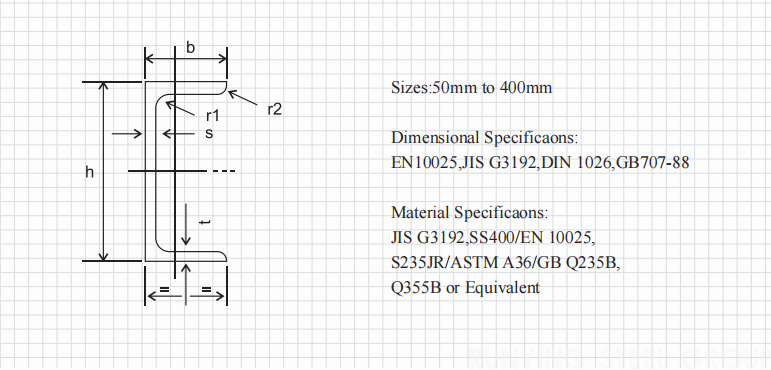
When ordering, it is crucial to specify the exact C purlin dimensions, including web height, flange width, lip length, and wall thickness to match your structural load requirements.
Below are the most common standard C purlin sizes (in mm) used in international construction projects:
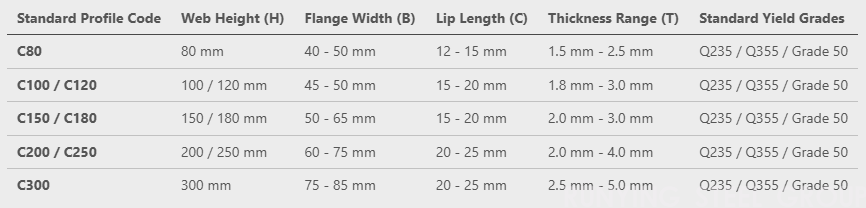
Note on Length & Coatings: Standard C purlin thickness typically ranges from 1.5 mm to 3.0 mm (up to 5.0 mm for heavy-duty spans). Standard lengths range from 3m to 12m, but can be custom-cut to fit container shipping specifications. Hot-dip galvanized C purlins (Z275 zinc coating) provide maximum corrosion resistance for highly humid or outdoor environments.
· Lightweight Yet Strong: Reduces overall building steel weight and simplifies on-site assembly.
· Highly Cost‑Effective: Roll-formed directly from high-quality Galvanized Steel Coils, minimizing material waste during production.
· Versatile Applications: Works seamlessly as roof purlins, side wall girts, or floor joists.
· Pre‑Punching Available: Bolt holes can be factory pre-punched based on CAD drawings for rapid bolted assembly.
· Long-Lasting Corrosion Protection: Premium galvanization protects structural steel from rust for decades.
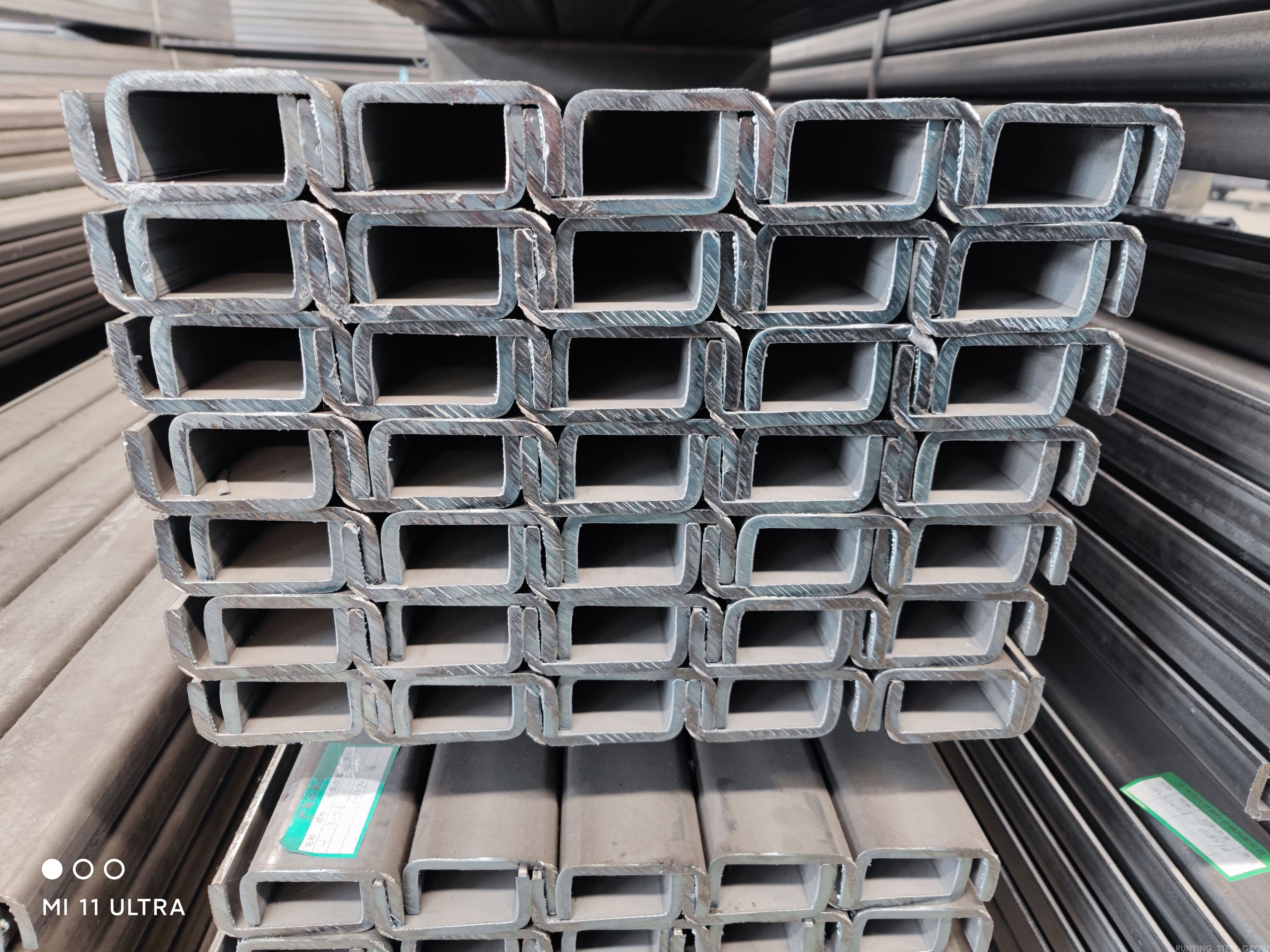
When comparing mill quotes for your project, keep in mind that C purlins price depends on several key variables:
1, Steel Grade & Yield Strength: Higher tensile strength grades (e.g., Q355 / Grade 50) offer higher loading capacity.
2, Thickness and Dimensions: Heavier and thicker steel sections require more raw material per linear meter.
3, Zinc Coating Weight (Galvanization): High-zinc coatings (such as Z275) offer superior rust protection compared to light galvanized or black steel options.
4, Custom Lengths & Ocean Freight: Tailored lengths optimize container loadability and reduce shipping costs via Tianjin Port.
5, Raw Material Steel Coil Market: Daily steel market price fluctuations directly impact final quotation rates.
Based in Tangshan, China—the nation's premier steel manufacturing hub—and located strategically near Tianjin Port, RUNYING Steel Group brings over 16 years of international steel export experience. We partner directly with leading steel mills to manufacture top-tier C purlins using premium galvanized, cold-rolled, and GI coil substrates.
· Direct Mill Pricing: Eliminate trade middlemen for maximum cost efficiency.
· Fully Customizable: Manufactured to your exact profile dimensions, thickness, and pre-punched hole patterns.
· Z275 Galvanized Standard: Premium zinc coating protection standard with full Mill Test Certificates (MTC EN 10204 3.1).
· Seaworthy Export Packaging: Bundled with protective corner guards and anti-rust wrapping for safe ocean transport.
· Fast Global Logistics: Direct container loading and dispatch from Tianjin Port staging yards.
A: The primary difference lies in their cross-section shape and structural connection methods. C purlins have equal flanges and are best suited for simple, independent spans or wall girts. Z purlins have unequal flanges that allow them to overlap at structural joints, making them much stronger for continuous-span roof structures.
A: C purlin thickness depends entirely on local engineering design requirements, wind/snow loads, and rafter spacing. For standard industrial steel warehouses, a thickness between 2.0mm and 3.0mm is most commonly specified.
· Learn about raw material coil options: Galvanized & Prepainted Steel Coil Specifications
· Calculate container weight limits: Steel Coil Weight & Dimensions Calculator Guide
· Third-party inspection standards: SGS Quality Verification & Testing at RUNYING Steel
Ready to optimize your building design with high-quality C purlins? Contact our technical engineering team today with your required dimensions, thickness, profile lengths, and destination port. We will provide a competitive factory price and clear delivery timeline.
· Direct Export Email: admin@tsrysteel.com
· WhatsApp / Phone: +86 15176700707
· Official Website: http://www.tsrysteel.com



RUNYING STEEL GROUP
 Tel:86-315-2199609
 Fax:86-315-5538212
 E-mail:admin@tsrysteel.com
 Central Plaza, Tangshan City
 website:www.tsrysteel.com
Alibaba:https://tsrunying.en.alibaba.com
website:www.tsrysteel.com
Alibaba:https://tsrunying.en.alibaba.com