If you're involved in steel procurement, logistics, or manufacturing, you've likely asked: "How much does a steel coil weigh?" It's not just a question of curiosity—it's essential for safe handling, accurate shipping costs, and proper equipment selection. The answer, however, isn't a simple number. Steel coil weight varies dramatically based on dimensions, material type, and production specifications.
This comprehensive guide explains everything you need to know about steel coil weight, including how to calculate it, typical weight ranges, and factors that influence what you'll pay—especially when sourcing steel coil for sale from international markets.
The Short Answer: Steel Coils Typically Weigh Between 3 and 30 Tons
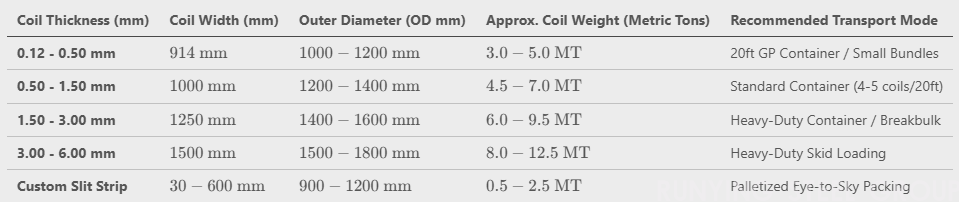
A single steel coil can weigh anywhere from 3 metric tons to over 30 metric tons, depending on its specifications. Most commonly, coils used in construction and manufacturing fall into the 5-20 ton range. Understanding how much a steel coil weighs requires examining several key variables.
Core Factors That Determine Steel Coil Weight
1. Material Density
The type of steel directly affects weight. Most carbon steel has a density of approximately 7.85 g/cm³ (0.284 lb/in³). This value is the foundation of all weight calculations. Different grades—whether steel coil hot rolled, cold rolled, or steel coil galvanized—maintain similar densities, though coatings add minimal additional weight.
2. Physical Dimensions
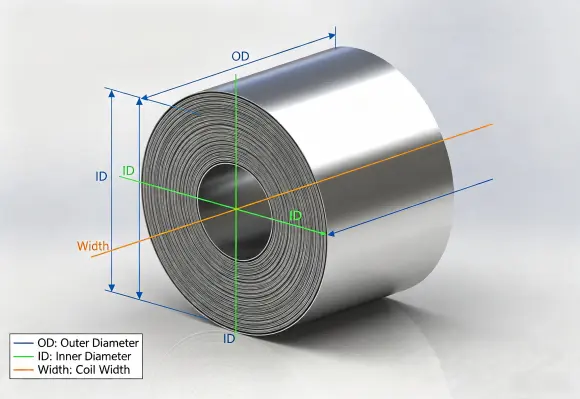
Four measurements are critical for calculating coil weight:
Thickness (mm or gauge): Ranges from thin foil (0.3mm) to heavy plate (20mm+)
Width (mm or inches): Typically 600mm to 2,000mm
Outer Diameter (OD): Usually 800mm to 2,000mm
Inner Diameter (ID): Standard IDs are 508mm (20 inches) or 610mm (24 inches)
3. Coil Length
The total steel coil length when unwound can reach several thousand meters. Longer coils naturally weigh more, but length is often the last variable buyers consider when asking "how much does a steel coil weigh?"
How to Calculate Steel Coil Weight: The Proven Formula
The most accurate method for calculating coil weight uses the annular volume method :
Weight = (π/4) × (OD² − ID²) × Width × Density
Where:
π = 3.1416
OD = Outer Diameter (meters or inches)
ID = Inner Diameter (meters or inches)
Width = Coil width (same units as diameters)
Density = 7,850 kg/m³ for carbon steel (or 0.284 lb/in³)
Practical Example:
For a coil with OD = 1,200mm, ID = 508mm, Width = 1,250mm, using steel density:
Volume = (3.1416/4) × (1.2² − 0.508²) × 1.25 = 1.27 m³
Weight = 1.27 × 7,850 = approximately 9,970 kg (9.97 metric tons)
This calculation method is used by steel coil manufacturers worldwide to determine exact specifications.
Typical Steel Coil Weights by Category
Understanding how much a steel coil weighs in different categories helps buyers plan logistics:
Coil Type | Thickness Range | Typical Weight Range | Common Applications |
Thin Sheet Coil | 0.3mm - 1.5mm | 3 - 8 tons | Roofing, cladding, and light fabrication |
Medium Gauge Coil | 1.5mm - 6.0mm | 8 - 15 tons | Automotive, general manufacturing |
Heavy Plate Coil | 6.0mm - 20mm | 15 - 30 tons | Shipbuilding, heavy machinery |
Galvanized Steel Coil | 0.4mm - 6.0mm | 5 - 12 tons | Construction, corrosion-resistant applications |
For reference, a typical 24 ton steel coil price inquiry usually refers to a heavy plate coil or multiple smaller coils bundled for shipping efficiency.
Why Weight Matters: Logistics and Cost Implications
Transportation Limits
Road transport of a single coil typically does not exceed 25 tons due to vehicle load limits. Port lifting equipment generally handles coils up to 30 tons per lift. Knowing how much does a steel coil weigh ensures you don't exceed these critical thresholds.
Cost Calculation
Steel is priced per ton. The 24 ton steel coil price is simply the per-ton market rate multiplied by 24, plus logistics. Understanding weight helps you:
Compare quotes accurately
Budget for freight costs
Plan inventory storage
Equipment Requirements
Coil handling equipment—from cranes to coil cars—is rated by maximum weight capacity. Exceeding these ratings risks catastrophic failure.
The Connection: Coil Weight and Steel Coil Packaging
Proper steel coil packaging depends heavily on weight. Heavier coils require:
Stronger steel strapping
Reinforced wooden pallets or cradles
Heavy-duty waterproof wrapping
Specialized lifting attachments
Reputable steel coil companies invest in packaging that matches the coil's weight class, ensuring safe ocean transit and handling at destination ports.
Steel Coil Used For: How Weight Influences Application
The question "how much does a steel coil weigh?" often connects directly to steel coils used for applications:
Light gauge coils (3-8 tons): Ideal for steel coil galvanized roofing sheets, wall cladding, and ductwork
Medium coils (8-15 tons): Common for automotive stamping, appliance manufacturing
Heavy coils (15-30 tons): Used in pipe manufacturing, shipbuilding plate, and heavy construction
From Weight Calculation to Quality Supply: Your Partner in Steel
Now that you understand how much a steel coil weighs and how to calculate it precisely, the next question is: where can you source coils that meet your exact weight and specification requirements?
We are a premier steel exporter based in Tangshan, China—the nation's steel production heartland—strategically located adjacent to Tianjin Port, the largest comprehensive port in northern China. With over 16 years of export experience, we bridge the gap between world-class steel coil manufacturers and global buyers like you.
Why Source Your Steel Coils from Us?
Direct Mill Access: Our long-standing partnerships with major steel coil companies and steel coil factory facilities give us preferential access to prime production capacity. We secure the exact steel coil size and weight you need, whether it's steel coil hot rolled, cold rolled, or steel coil galvanized.
Competitive Pricing Advantage: By working directly with mills and optimizing logistics through Tianjin Port, we offer highly competitive rates. Whether you're tracking the 24 ton steel coil price or need a custom order, we deliver exceptional value.
Comprehensive Product Range: From thin-gauge steel coil for sale to heavy plate coils, we supply the full spectrum. Our steel coil galvanized products meet international corrosion resistance standards for demanding applications.
Precise Weight Specifications: We understand that knowing how much does a steel coil weigh is critical for your operations. Every coil is weighed and certified before shipment, with detailed documentation provided.
Professional Steel Coil Packaging: Our packaging meets international ocean freight standards—waterproof, edge-protected, and secure for safe arrival. We consider weight distribution and lifting requirements in every package design.
Technical Expertise: Our team helps you select the right grade, coating, and steel coil size for your specific steel coil used for applications, ensuring you don't overpay or under-specify.
Ready to Source High-Quality Steel Coils?
Understanding how much does a steel coil weigh is just the beginning. Partnering with an experienced, reliable supplier ensures you receive exactly what you need—at the right weight, right price, and right quality.
Contact us today with your specifications. Let our 16+ years of export experience and direct mill access provide you with the best steel coil solutions at truly competitive prices. Request a quote now and discover the difference of working with a true steel industry partner.