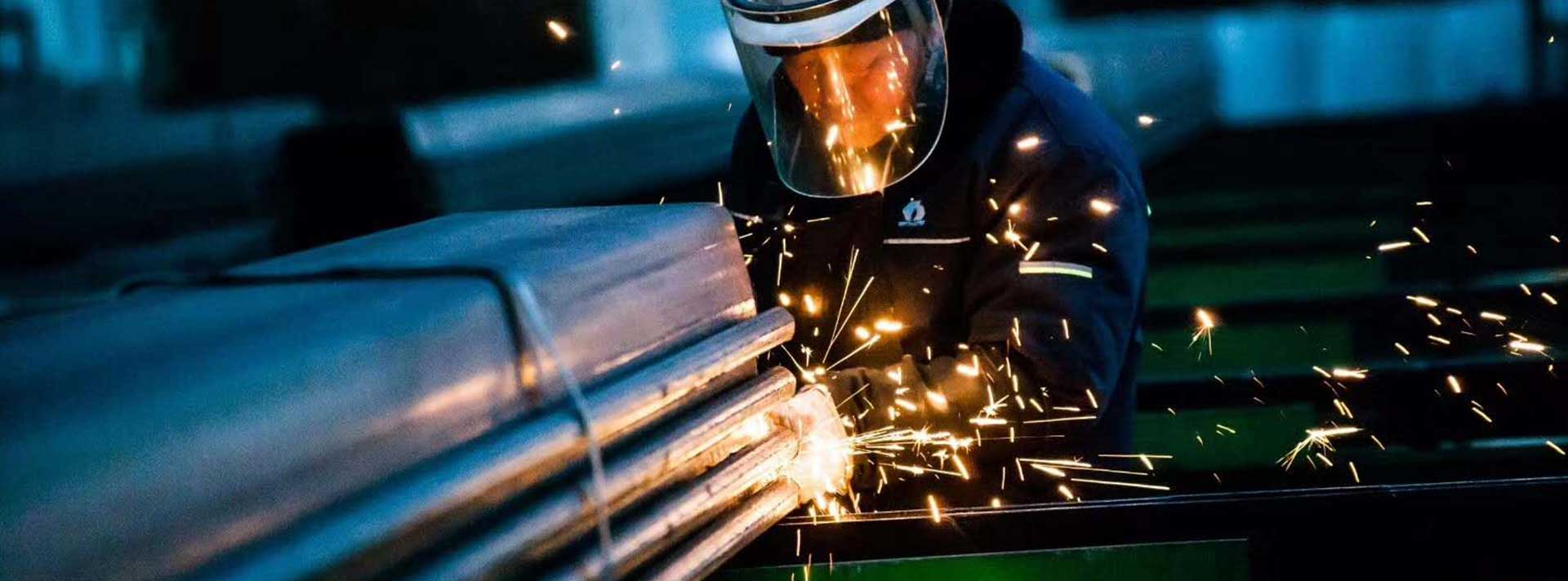
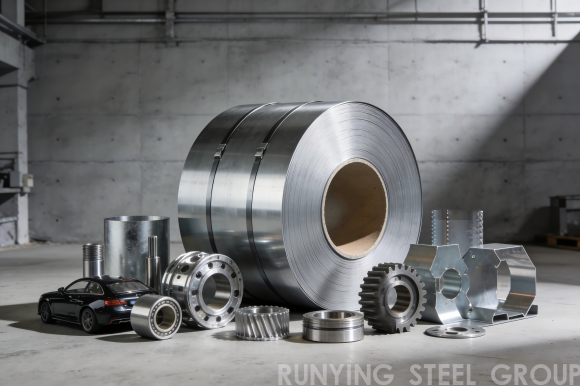
If you've ever asked "what steel coil used for," you're asking about one of the most fundamental materials in modern manufacturing and construction. Steel coils are the unsung heroes of the industrial world—they arrive at factories as massive rolls of metal and leave as countless products we use every day. From the roof over your head to the car you drive, steel coils are the starting point.
This comprehensive guide answers what steel coil used for across major industries, explains the different types available, and helps you understand how to source the right coils for your specific applications.
The Short Answer: Steel Coils Are Everywhere
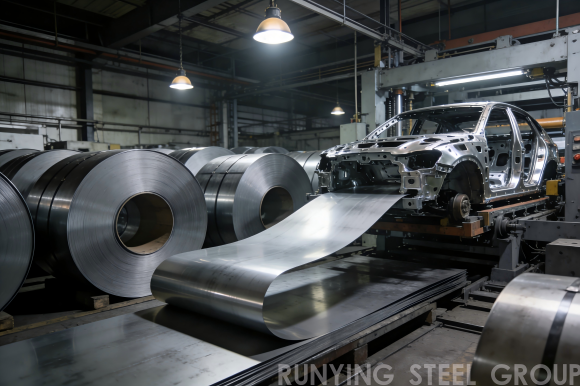
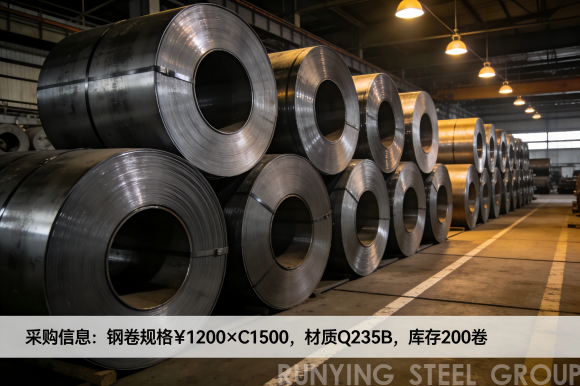
Steel coils are semi-finished products that serve as the raw material for thousands of manufactured goods. After production at a steel coil factory, these coils are shipped to manufacturers who uncoil, cut, stamp, form, and assemble them into finished products. The versatility of steel coils makes them indispensable across virtually every industrial sector.
Steel coil used for includes, but is not limited to:
Building construction and infrastructure
Automotive manufacturing
Appliance production
Packaging materials
Industrial equipment
Energy sector applications
Furniture and consumer goods
Major Applications: Where Steel Coils Become Finished Products

1. Construction and Building Materials
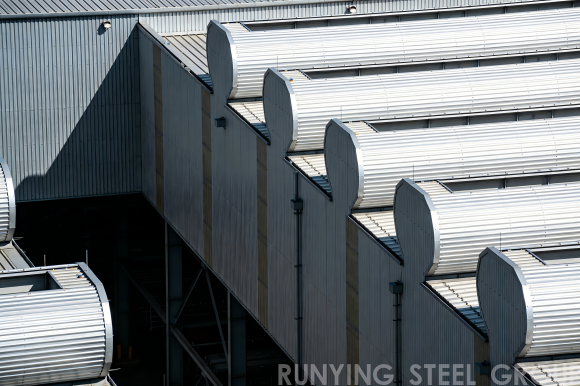
The construction industry is one of the largest consumers of steel coils. When asking "what steel coil used for" in construction, the answer covers nearly every part of a building:
Roofing and Cladding:
Corrugated metal roofing sheets
Standing seam metal roofs
Wall cladding panels
Gutters and downspouts
These applications typically use steel coil galvanized products, where a zinc coating provides excellent corrosion resistance for long-term outdoor exposure. The steel coil size for roofing applications typically ranges from 0.3mm to 1.2mm in thickness, with widths of 600mm to 1,250mm.
Structural Components:
Steel purlins and girts (C and Z sections)
Floor decking
Light gauge steel framing
Metal studs and tracks
HVAC Systems:
Ductwork for heating and cooling
Ventilation components
Air handling units
Pre-Engineered Buildings:
Entire warehouses, factories, and commercial buildings are constructed from components roll-formed from steel coils. The steel coil length in these applications can be substantial—some buildings use thousands of meters of formed steel.

2. Automotive Manufacturing
The automotive industry relies heavily on steel coils for both structural and aesthetic components. Steel coil used for automotive applications includes:
Body Panels:
Doors, hoods, and trunk lids
Roof panels
Fenders and quarter panels
Side panels
These components are stamped from large blanks cut from steel coils. The steel coil hot rolled or cold rolled products used here require excellent surface quality and precise thickness control.
Structural Parts:
Chassis components
Reinforcement brackets
Seat frames
Crash management systems
Exhaust Systems:
Often made from specialized coated steels or stainless steel coils for heat and corrosion resistance.
Wheels and Suspension:
Many wheel components and suspension parts start as steel coil blanks before being formed and welded.

3. Appliance Manufacturing
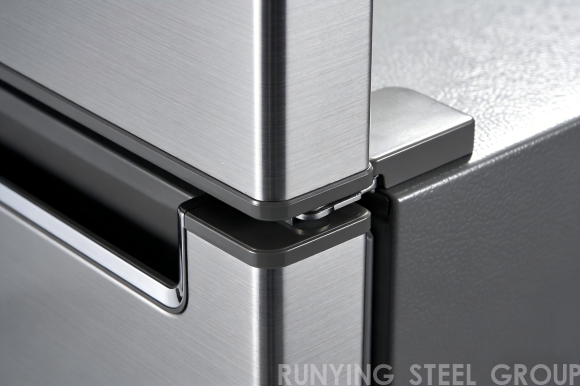
Your home is filled with products made from steel coils. When asking "what steel coil used for" in appliances, consider:
Major Appliances:
Refrigerator cabinets and doors
Washing machine drums and housings
Oven and range bodies
Dishwasher interiors
Microwave oven casings
Small Appliances:
Toaster bodies
Coffee maker housings
Blender bases
Appliance manufacturers often specify steel coil galvanized or pre-painted coils to eliminate the need for post-production painting. The steel coil size for appliances typically ranges from 0.4mm to 1.5mm thickness.

4. Packaging Industry
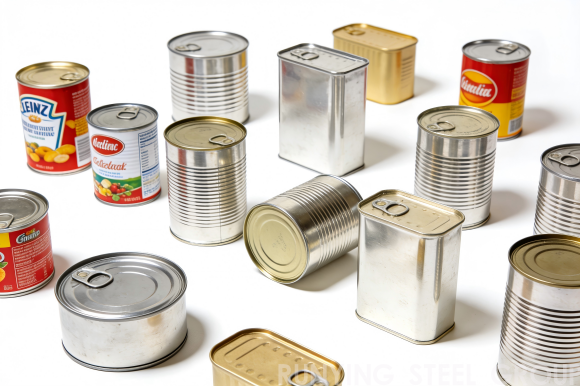
Steel coils are the raw material for metal packaging:
Food and beverage cans
Aerosol containers
Paint and chemical pails
Crown caps and closures
Drum containers
These applications use thin-gauge steel coils (typically 0.15mm to 0.5mm) that are often tin-coated (tinplate) for corrosion resistance and food safety.

5. Energy Sector
The energy industry uses substantial quantities of steel coils:
Oil and Gas:
Line pipe for oil and gas transmission
Casing and tubing
Storage tank components
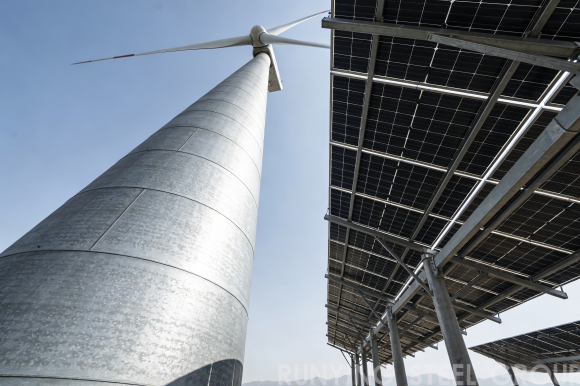
Renewable Energy:
Solar panel mounting structures
Wind turbine towers
Transformer casings
Electrical:
Transformer laminations
Motor housings
Electrical enclosures
6. Industrial Equipment and Machinery
Manufacturing equipment and industrial machinery rely on steel coils for:
Machine frames and bases
Conveyor systems
Storage racks and shelving
Industrial ovens and tanks
Agricultural equipment
7. Furniture and Consumer Goods
Modern furniture often incorporates steel coil components:
Office furniture (desks, filing cabinets)
Shelving units
Bed frames
Lockers
Display fixtures
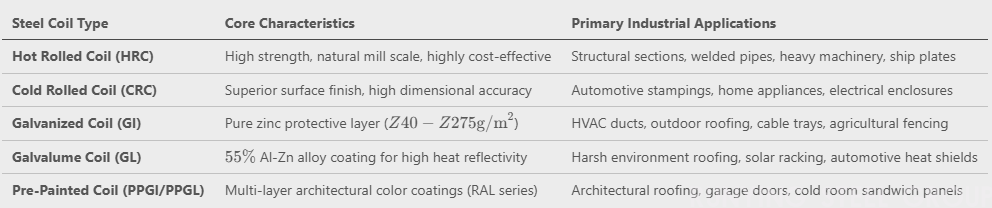
Types of Steel Coils and Their Applications
Different applications require different types of steel coils. Understanding these helps answer "what steel coil used for" more precisely:
Hot Rolled Steel Coil (HRC)
Steel coil hot rolled is produced at high temperatures and has a scaled surface. It's used for:
Structural applications where surface finish isn't critical
Pipes and tubes
Heavy machinery components
Shipbuilding plates
Railroad equipment
Cold Rolled Steel Coil (CRC)
Cold rolled steel has a smooth, bright surface and tighter tolerances. It's used for:
Automotive body panels
Appliance housings
Furniture
Precision components
Galvanized Steel Coil (GI)
Steel coil galvanized has a zinc coating for corrosion resistance. It's used for:
Roofing and cladding
Automotive underbody parts
HVAC ductwork
Outdoor equipment
Electrical enclosures
Pre-Painted Steel Coil (PPGI/PPGL)
Color-coated coils combine corrosion protection with aesthetic finishes. They're used for:
Architectural panels
Garage doors
Appliance visible surfaces
Signage
Galvalume Steel Coil (GL)
With aluminum-zinc coating, these offer superior corrosion resistance and heat reflectivity for:
High-end roofing
Agricultural buildings
Automotive heat shields
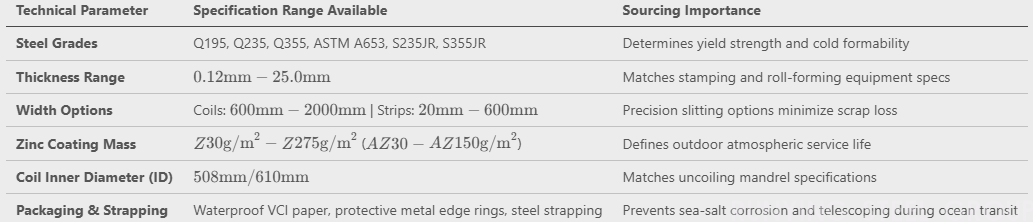
Key Specifications When Ordering Steel Coils
When you're sourcing steel coil for sale, understanding these specifications ensures you get the right product for your steel coil used for application:
| Specification | Typical Range | Why It Matters |
| Steel Grade | ASTM A653, JIS G3302, EN 10143 | Determines strength, formability, and suitability |
| Thickness | 0.15mm - 25mm | Affects strength, weight, and application |
| Width | 600mm - 2,000mm | Must match your processing equipment |
| Coating Type | GI, GL, PPGI, PPGL | Corrosion resistance level |
| Coating Weight | Z60 - Z275 (g/m²) | Determines longevity in outdoor exposure |
| Inner Diameter | 508mm or 610mm | Must fit your uncoiling equipment |
| Coil Weight | 3 - 30 tons | Affects handling and logistics |
| Steel Coil Length | As required | Total material available |
A typical 24 ton steel coil price inquiry might refer to:
One heavy-gauge coil (24 tons single coil)
Multiple medium coils bundled for shipping
A container-load quantity
Steel Coil Packaging: Protecting Your Investment
Proper steel coil packaging is essential for ensuring your material arrives in perfect condition. Understanding what steel coil used for helps determine the right packaging approach:
Standard Packaging Includes:
Waterproof wrapping (VCI paper, plastic film)
Edge protectors to prevent damage
Steel strapping (through the eye and circumference)
Wooden cradles or pallets for stability
Identification labels with specifications
Packaging Considerations by Application:
Outdoor storage: Heavy waterproofing required
Indoor storage: Basic moisture protection
Export shipping: Must meet international standards for ocean freight
Clean applications (automotive, appliance): Extra surface protection needed
Reputable steel coil companies invest in proper packaging to prevent:
Rust and corrosion during transit
Edge damage from shifting
Coil telescoping (layers sliding sideways)
Moisture ingress in containers
From Understanding Applications to Sourcing Quality Coils
Now that you understand what steel coil used for across industries, the next question is: where can you source high-quality coils that meet your specific requirements from a reliable partner?
We are a premier steel exporter based in Tangshan, China—the nation's steel production heartland—strategically located adjacent to Tianjin Port, the largest comprehensive port in northern China. With over 16 years of export experience, we bridge the gap between world-class steel coil manufacturers and global buyers like you.
Why Source Your Steel Coils from Us?
Direct Mill Access & Price Advantage
Our long-standing partnerships with major steel coil companies and steel coil factory facilities give us preferential access to prime production capacity. We secure the exact steel coil size and specifications you need—whether it's steel coil hot rolled, cold rolled, or steel coil galvanized—without intermediary markups. This direct relationship allows us to offer highly competitive pricing, whether you're tracking the 24 ton steel coil price or need a custom order.
Comprehensive Product Range
We supply the full spectrum of steel coils for every application:
Hot Rolled Steel Coil (HRC)
Cold Rolled Steel Coil (CRC)
Steel Coil Galvanized (GI)
Galvalume Steel Coil (GL)
Pre-Painted Steel Coil (PPGI/PPGL)
Specialty coated products
Precise Specifications
We understand that knowing what steel coil used for in your specific application requires precise material selection. Every coil is certified with detailed specifications, including:
Steel coil size (thickness, width)
Steel coil length (total meters or weight)
Mechanical properties and chemical composition
Coating weight and type
Surface quality grade

Professional Steel Coil Packaging
Our packaging meets and exceeds international ocean freight standards:
Waterproof wrapping protects against moisture during transit
Edge protectors prevent damage to coil edges
Heavy-duty steel strapping ensures stability
Wooden cradles distribute weight evenly
All materials selected based on coil specifications
Strategic Logistics Hub
Our location adjacent to Tianjin Port enables efficient consolidation and shipment. We manage the entire logistics chain—from mill to port to your doorstep—reducing lead times and freight costs.
Technical Expertise
Our team helps you select the right grade, coating, and specifications for your specific steel coil used for applications. We ensure you don't overpay or under-specify, providing technical support throughout the purchasing process.
Frequently Asked Questions About Steel Coil Applications
Q: What's the difference between hot rolled and cold rolled coils?
A: Hot rolled steel is produced at high temperatures, has a scaled surface, and is used for structural applications. Cold rolled steel is processed further for smoother surface, tighter tolerances, and is used for visible or precision components.
Q: How do I choose between galvanized and Galvalume?
A: Galvanized (zinc-coated) offers excellent sacrificial protection and is cost-effective. Galvalume (aluminum-zinc coated) offers superior corrosion resistance and heat reflectivity, ideal for roofing in harsh environments.
Q: What steel coil used for automotive body panels?
A: Automotive body panels typically use cold rolled steel or galvanized steel with excellent surface quality, often with additional coatings for corrosion resistance.
Q: How is steel coil length calculated?
A: Coil length depends on weight, thickness, and width. The formula is: Length = Weight / (Thickness × Width × Density). A heavier coil or thinner material means longer length.
Q: What affects 24 ton steel coil price?
A: Price factors include steel grade, thickness, width, coating type, coating weight, and current market conditions for raw materials.
Ready to Source the Right Steel Coils for Your Applications?
Understanding "what steel coil used for" is the first step toward making informed purchasing decisions. Whether you need coils for construction, automotive, appliances, or any other application, partnering with an experienced supplier ensures you get the right material at the right price.
Contact us today with your specifications. Let our 16+ years of export experience and direct mill access provide you with the best steel coil solutions at truly competitive prices. Request a quote now and experience the difference of working with a true steel industry partner.