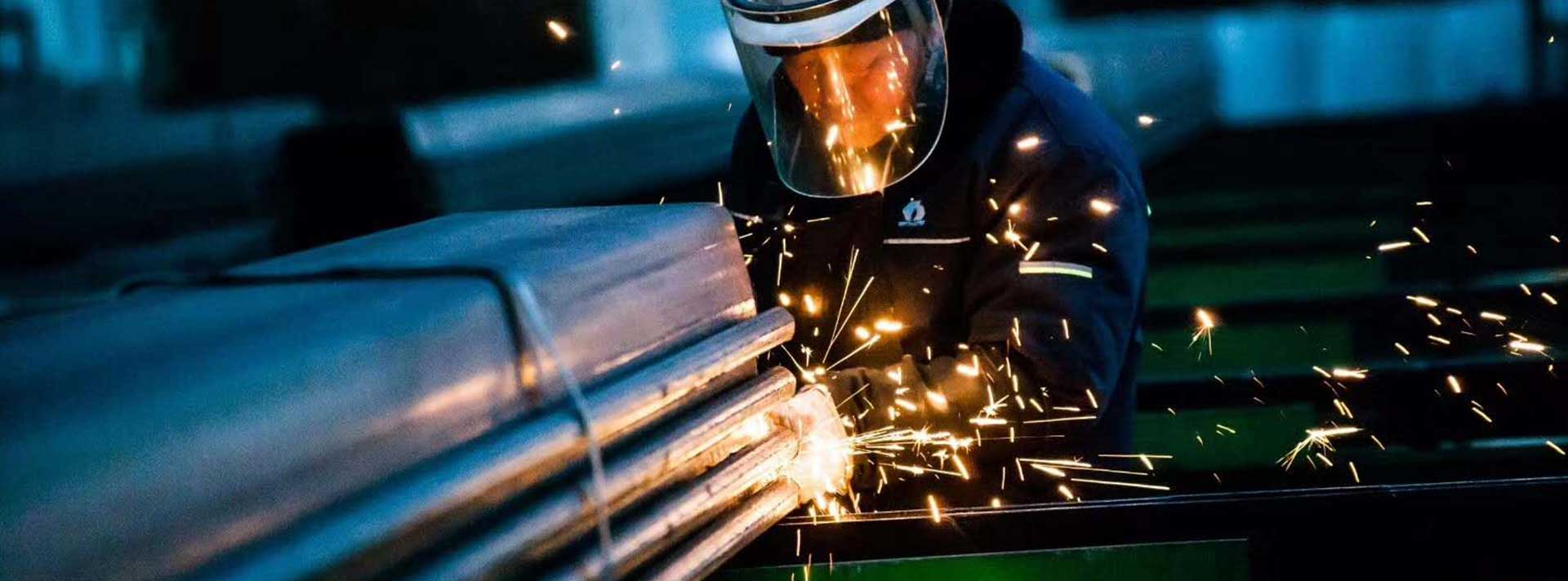
The question “where steel comes from” is fundamental, yet the answer bridges millennia of innovation. Today's high-strength, precision steel coil begins its journey deep within the Earth, undergoing a remarkable transformation before arriving at a steel coil factory for finishing. This process is the backbone of modern industry, and understanding it is key to appreciating the quality and complexity of the final product, whether you're a buyer seeking steel coil for sale or an engineer specifying materials.
This guide traces the origins of steel, illuminating the sophisticated journey from raw material to the essential industrial commodity we rely on.
Stage 1: The Origin – Mining the Raw Materials
Steel's primary source is iron ore, a rock containing iron oxides. Major global sources include Australia, Brazil, China, and India. But iron ore alone isn't enough. The process also requires:
1, Coking Coal: Used to produce coke, a high-carbon fuel that provides both heat and the essential carbon agent for the chemical reaction in a blast furnace.
2, Limestone: Acts as a flux, binding with impurities in the ore to form slag, which is removed.
Stage 2: The Transformation – From Iron Ore to Crude Steel
This is where chemistry and engineering turn rock into metal. The two predominant modern routes are:
1. The Blast Furnace-Basic Oxygen Furnace (BF-BOF) Route
This traditional method produces about 70% of the world's steel.
The Blast Furnace: Iron ore, coke, and limestone are fed into the top of a towering blast furnace. Blasted with hot air, the coke burns, creating intense heat and carbon monoxide gas. This gas reduces the iron ore, melting it into liquid pig iron, which contains about 4% carbon and other impurities.
The Basic Oxygen Furnace (BOF): Molten pig iron is transferred to a BOF. A high-purity oxygen lance is lowered, blowing oxygen through the melt. This oxidizes and removes excess carbon and impurities in a rapid, controlled "burn." Precise additions of other elements (like chromium or nickel for stainless steel) create the desired steel grade.
2. The Electric Arc Furnace (EAF) Route
This method, often used for recycling, is responsible for most of the remaining global production.
The Process: The primary feedstock is not pig iron, but scrap steel. Giant bundles of scrap are placed into the EAF. Powerful graphite electrodes are lowered, and an enormous electric arc is struck, generating enough heat to melt the scrap (up to 1,600°C). Alloying elements are then added to achieve the precise chemical composition. This method is more flexible and energy-efficient for producing many specialty grades.
Stage 3: The Forming – From Molten Steel to Finished Coil
Once refined to its exact chemical "recipe," the liquid steel must be shaped. This is where the modern steel coil is born.
1, Continuous Casting: The molten steel is poured into a water-cooled copper mold, forming a solid slab, bloom, or billet. For coils, a thin slab or strip caster is used.
2, Hot Rolling: The still-hot, solid slab is passed through a series of rolling stands at high temperatures to reduce its thickness and increase its length, forming a long, thin strip. This steel coil hot is then wound into a master coil for further processing or sale.
3, Cold Rolling & Finishing (For Coated Products): For a smoother surface and tighter thickness tolerances, hot-rolled coils can be pickled (cleaned) and then cold-rolled. They may then proceed to a coating line to become, for instance, a steel coil galvanized through hot-dip or electrolytic processes. Steel coil packaging at this stage is critical to protect the pristine surface during transport.
From Global Production to Your Project: The Role of the Supplier
Understanding where steel comes from—from mine to mill—highlights the importance of a reliable supply chain partner. The final steel coil size, grade, coating, and steel coil length must match your exact application, whether it's for construction, automotive parts, or appliance manufacturing.
This is where our expertise bridges the gap. As an established exporter based in Tangshan, China—a global epicenter of steel production—and strategically located next to the Tianjin Port, we connect international buyers directly to premier steel coil manufacturers.
Why source your steel coils through us?
1, Direct Access & Price Advantage: Our 16+ years of deep-rooted partnerships with major mills give us direct access to high-quality products, allowing us to offer competitive value, whether you're inquiring about a 24 ton steel coil price or a larger shipment.
2, Technical & Logistical Mastery: We don't just sell a steel coil for sale; we provide solutions. We help navigate specifications, ensure optimal steel coil packaging for ocean freight, and leverage our port-side location for efficient logistics.
3, Trusted Link in the Chain: In the complex journey of where steel comes from to where it's used, we are the reliable partner that ensures quality, consistency, and transparency from the steel coil factory to your delivery point.
Ready to Source with Confidence?
The journey of steel from ore to coil is a testament to human industrial achievement. Sourcing it successfully requires a partner who understands every step of that journey.
Contact us today to discuss your project requirements. Let our 16 years of export experience and direct mill relationships provide you with not just a product, but a dependable supply chain for all your needs in galvanized, cold-rolled, or hot-rolled steel coils. (Click this contact us!)



RUNYING STEEL GROUP
 Tel:86-315-2199609
 Fax:86-315-5538212
 E-mail:admin@tsrysteel.com
 Central Plaza, Tangshan City
 website:www.tsrysteel.com
Alibaba:https://tsrunying.en.alibaba.com
website:www.tsrysteel.com
Alibaba:https://tsrunying.en.alibaba.com